
Longer Awake Windows for 3–6 Months: 12 Games to Fill Them With Purpose
One-to-seven-minute activities for rolling, sitting practice, and giggly bonding time — no special gear needed for most.
Awake windows noticeably stretch out at this age, and it's often hard to tell what to actually do with your baby during them — let alone what's genuinely useful.
Here's the good news: this stretch is one of the busiest for development in the whole first year. Your baby is learning to roll, reaching for things on purpose, babbling back when you talk, and starting to notice cause and effect — pull a sock, and something happens. None of that needs a special program. It happens in ordinary minutes of play, tummy time, and a few minutes of massage before a nap.
The real trick isn't finding more time with your baby — it's knowing what to do with the time you already have. That's exactly what these 12 games are for: simple, five-minutes-or-less ideas that turn a longer awake window into something your baby's mind and body can grow from.
This article is informational and doesn't replace a pediatrician's advice — full note at the end.
In this guide
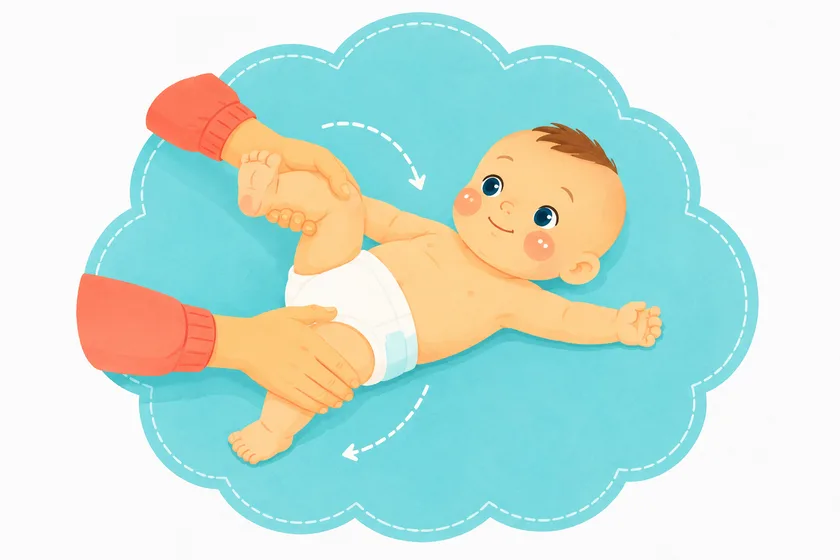
Roll-Over Assist
How to do it
Lay your baby on their back. Place one hand on their hip, and with the other hand bend the opposite leg at the knee, gently pulling it across the body — the pelvis will turn and baby will naturally follow with their shoulders and head. Repeat on both sides 2–3 times.

Waiting Game
How to do it
Lay your baby on their back. Slowly bring your face close to theirs, making a rising "oooooh" sound, then suddenly give them a big kiss on the tummy.

Mirror Time
You'll need: a soft, baby-safe mirror
How to do it
Babies love looking at themselves at this age. Place a soft, baby-safe mirror in front of your baby during tummy time — lie down next to them and make funny faces together.

Learning Opposites
How to do it
This is big, big, big
(spread arms wide)
This is small, small, small
(cup hands close together)
This is short, short, short
(hold palms facing each other, low)
This is tall, tall, tall
(reach one hand up, keep the other low)
This is fast, fast, fast
(circle fists quickly)
This is slow, slow, slow
(circle fists slowly)
This is yes, yes, yes
(nod your head)
This is no, no, no
(shake your head)
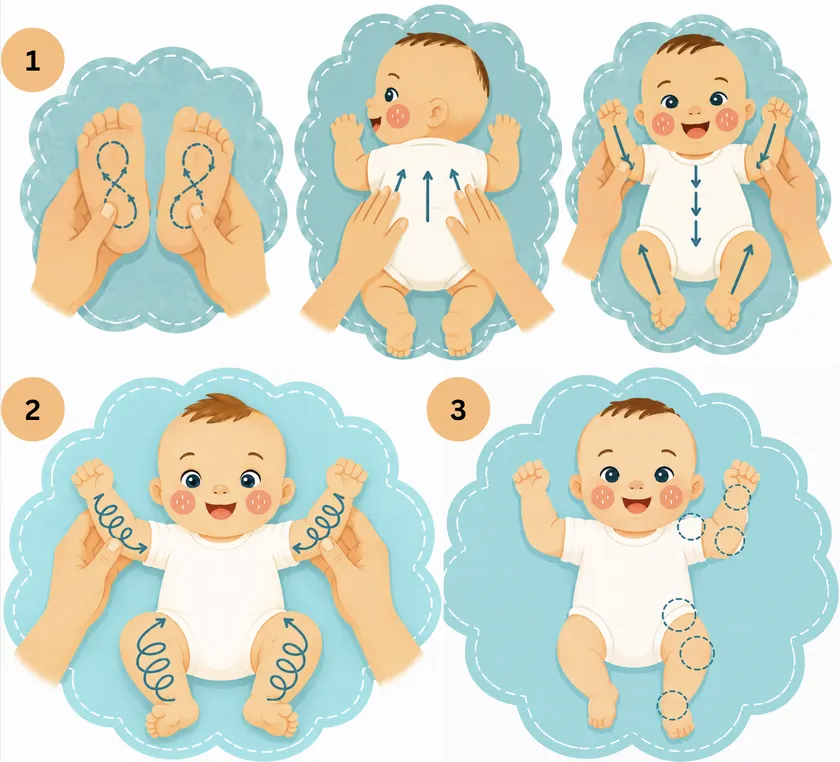
Massage for Every Day
You'll need: emollient, optional
How to do it
1. Eights on heels. Stroking with warm hands from periphery to center: arms → shoulders, legs → hips, back from bottom to top. Avoid the armpits, inner thighs, and groin area.
2. Muscle kneading with circular movements (avoid the tummy).
3. Passive exercises — gently bending arms and legs at all joints.
4. Face stroking, palm and foot massage — especially beneficial for speech development.
A massage ball can be added without pressure to stimulate the feet.

Sit-Up Pull
How to do it
Let your baby grab your fingers or a pair of rings and encourage them to pull up to a semi-reclined position (no higher than 45°). If their head falls back, it's too early — go back to strengthening during tummy time first.
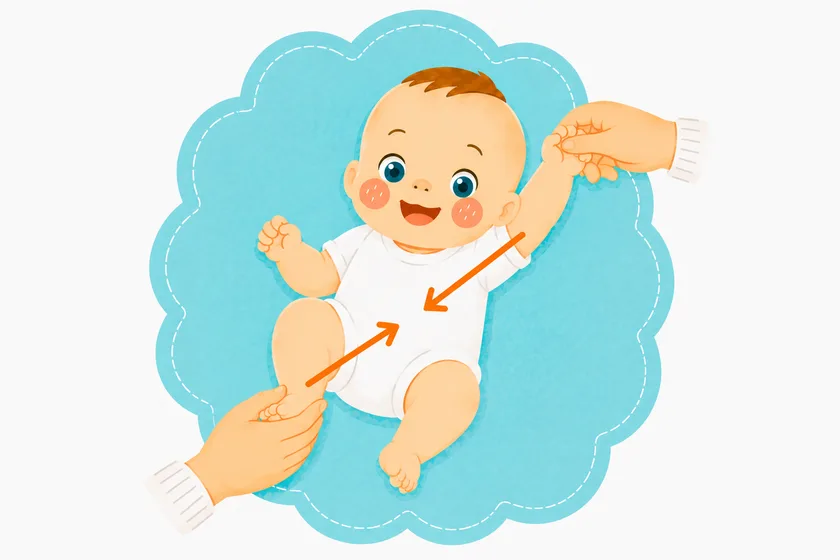
Cross-Crawl Exercise
How to do it
Lay your baby on their back, take one hand and the opposite foot, and bring them together — tap the fist against the heel, or let the hand grab the foot and pull it toward the tummy. Repeat 3 times on each side.
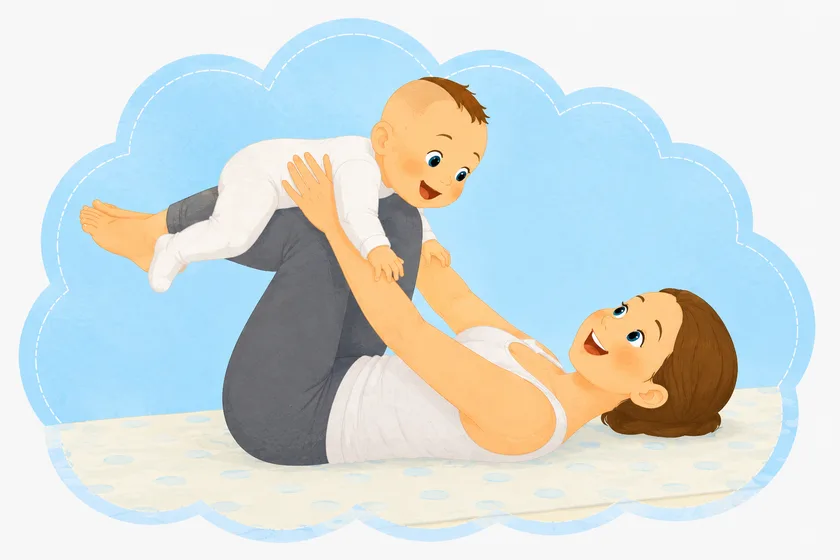
Airplane
How to do it
Lay your baby tummy-down across your legs, holding them securely, and gently sway your legs from side to side.

Knee Rocking
How to do it
Sit your baby on your lap in a semi-reclined position, back against your belly, leaning slightly onto you — hold them by the hips. Gently tilt them side to side and back and forth in a small range of motion so their body learns to find balance. No sudden movements.
⚠️ Baby should be holding their head steadily before trying this.
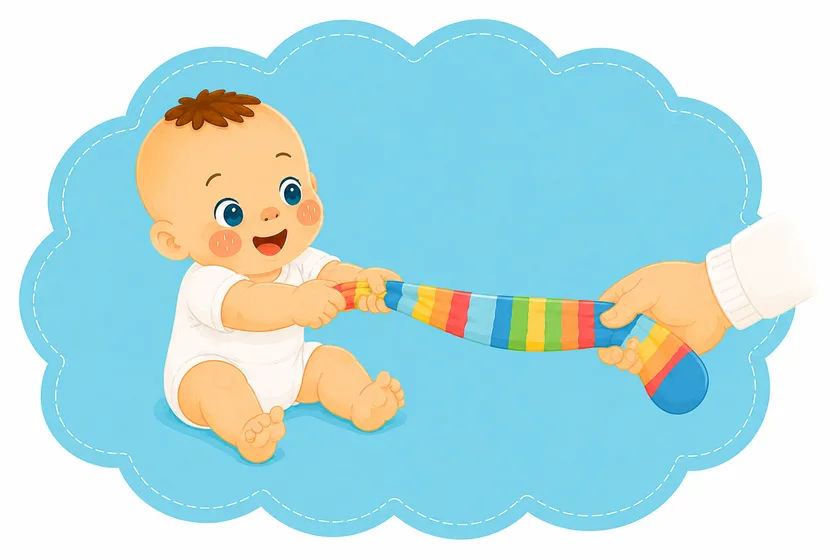
Push-Pull From the Sock
You'll need: a long, clean sock
How to do it
Use a long, clean sock to play tug.
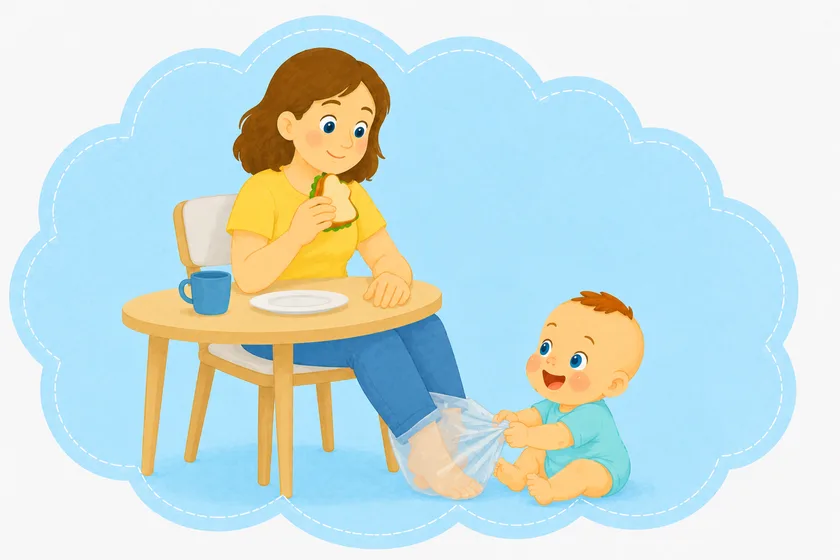
Crinkle Feet
You'll need: a clean, crinkly plastic bag
How to do it
While you eat, slip one foot into a clean, crinkly plastic bag — your baby will be busy trying to pull it off while you get through your sandwich.
⚠️ Only with an adult right there, and never use thin, transparent plastic bags.

Tickle Game
How to do it
Goat is coming, goat is near,
(make finger-horns, creep slowly toward baby)
Clickety clack — do you hear?
(tap baby's feet)
Waggle waggle goes her funny tail,
(clap baby's hands together)
One little boop — and another — without fail —
(gently poke baby's tummy with finger-horns)
And tickle tickle tickle!
(tickle sides and armpits)
Important — please read. This article is for general information only and is advisory in nature. The activities are drawn from the BabyDone activity library and described in simplified form.
Nothing here is medical advice, and it doesn't replace an in-person visit with a qualified pediatrician. Every baby is different — if you have any concerns about your baby's health or whether an activity is appropriate, check with your doctor. Always stay close during playtime, and stop if your baby seems tired or fussy.