
11 Games to Play With Your 6–9 Month Old: Making Awake Time Count
No need to buy new toys — bottles, scarves, boxes, and things you already have at home turn into simple games that build your baby's motor skills, coordination, and first words.
By 6–9 months, your baby is changing fast: sitting up on their own, reaching for toys, and some are already pulling up to stand holding onto furniture. The grasping reflex gives way to a real, deliberate grip — now your baby picks things up with a whole hand and explores them by touch and taste.
This is also the age when object permanence clicks into place — a toy doesn't disappear just because it's hidden under a scarf, which is exactly why peek-a-boo games get such a big reaction. Babbling gets more structured, and rhythmic rhymes — claps, tickles, hide-and-reveal games — start to feel like a real "conversation," even if the reply is just giggles and coos.
Many parents worry they need to constantly entertain their baby during awake time — in reality, simple, repeated actions hold their attention better than flashy button-toys. Play at this age isn't a lesson; it's how your baby trains body and brain through what already fascinates them: pulling, banging, hiding, and finding things. Here are 11 simple ideas to make that awake time count.
This article is informational and doesn't replace a pediatrician's advice — full note at the end.
In this guide
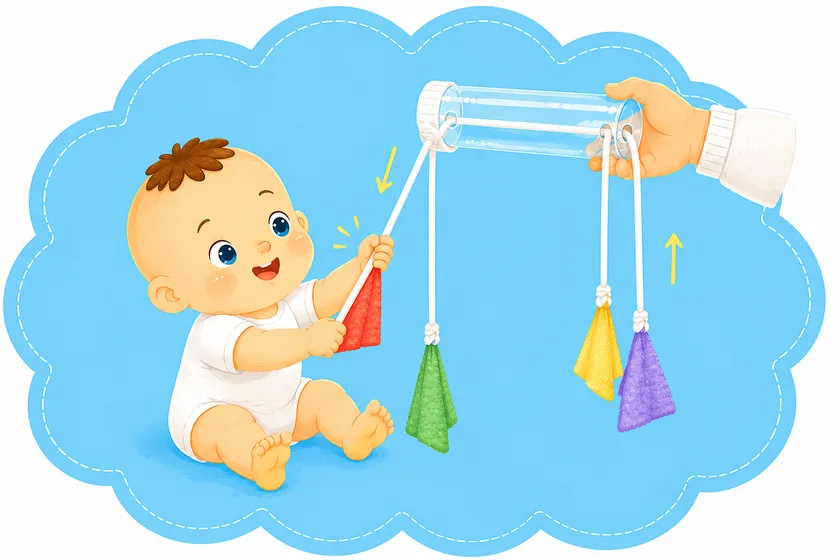
Pull-String Bottle Toy
You'll need: Plastic bottle, laces, pieces of fabric
How to do it
Hang a bottle with strings threaded through it, with brightly colored pieces of fabric hanging from the ends: when the child pulls one side, the other rises.
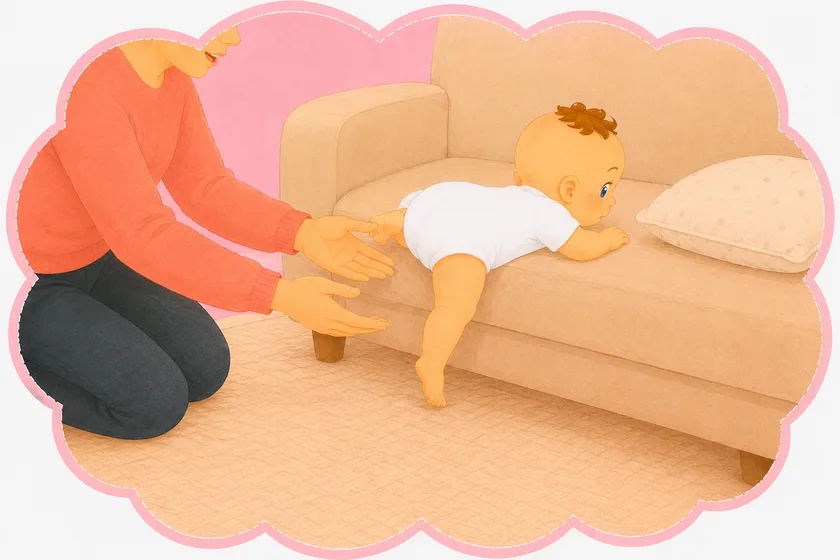
Climbing Down Safely
How to do it
Bring your baby to the edge of the couch. Gently turn them onto their tummy with their feet toward the edge. Help them slide one foot down, then the other — your baby comes down feet-first.
Repeat every time your baby reaches the edge. After a few weeks, they will start turning themselves around.
You can say "feet first" or "scoot down" — the word becomes a cue.
⚠️ Until the skill is solid, the couch remains a fall risk — keep your baby in sight at all times.

Balloon Kick
You'll need: Balloon
How to do it
Hold your baby under their knees. Blow up a balloon and gently bat it with your baby's feet.
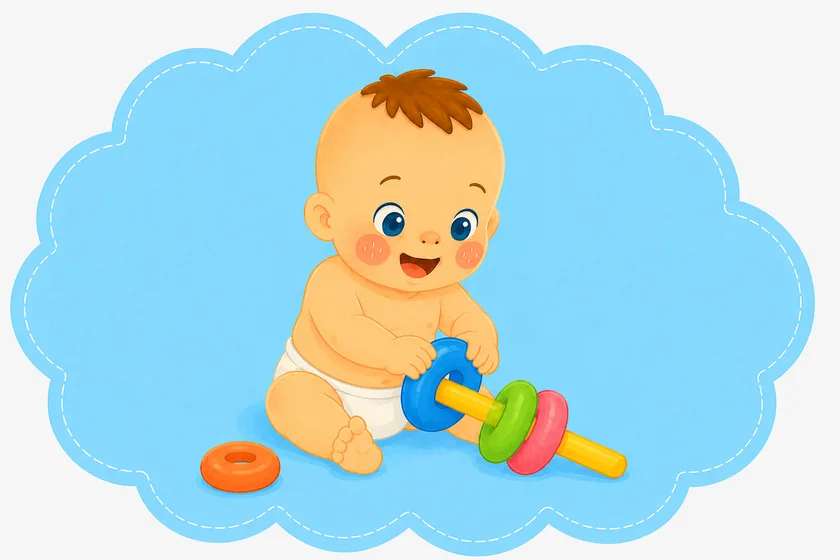
Take Off the Ring
You'll need: Pyramid with rings
How to do it
Place the pyramid rod on its side and invite the child to remove the rings from it.
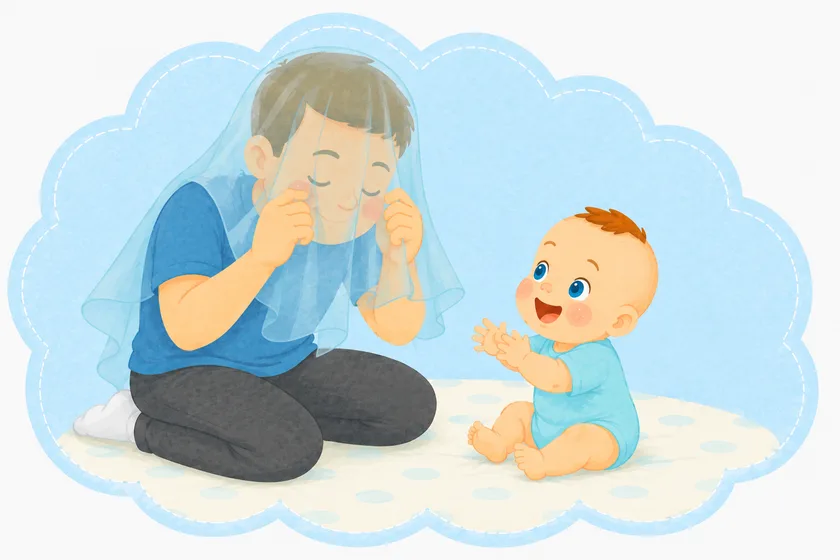
Peek-a-Boo with a Scarf
You'll need: Semi-transparent scarf
How to do it
Take a semi-transparent scarf. Cover yourself with it and make funny faces. Then cover your baby and pretend you can't see them. Lift the scarf and act delighted to find them.
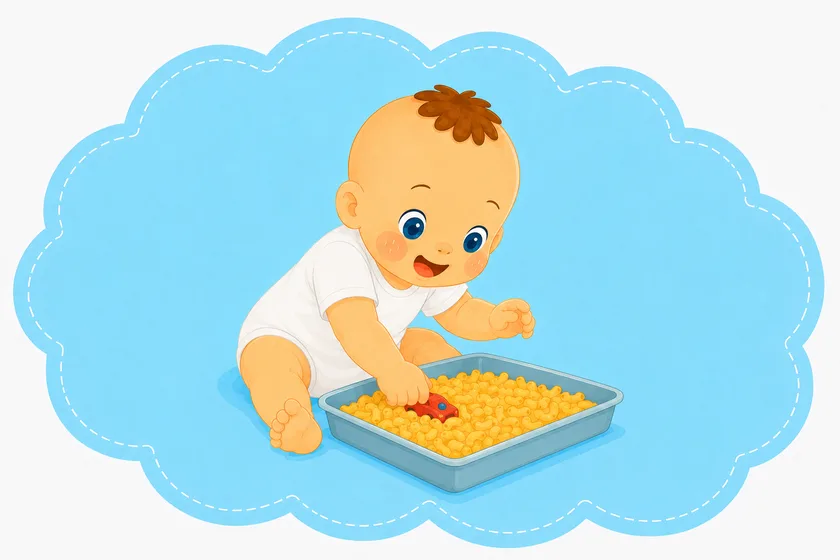
Treasure Dig
You'll need: Shallow pot, grains, toy
How to do it
Fill a pot with dry pasta or grains, bury a bright toy inside, and invite your baby to dig it out.
⚠️ Always supervise.
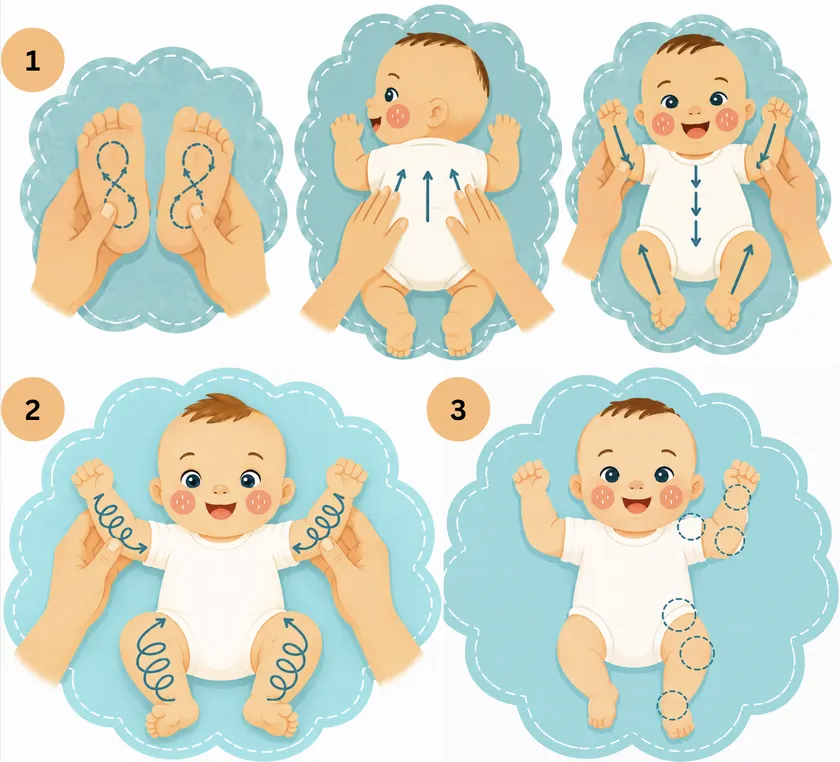
Massage for Every Day
You'll need: Emollient (if necessary)
How to do it
1. Eights on heels. Stroking with warm hands from periphery to center: arms → shoulders, legs → hips, back from bottom to top. Avoid the armpits, inner thighs, and groin area.
2. Muscle kneading with circular movements (avoid the tummy).
3. Passive exercises — gently bending arms and legs at all joints.
4. Face stroking, palm and foot massage — especially beneficial for speech development.
A massage ball can be added without pressure to stimulate the feet.
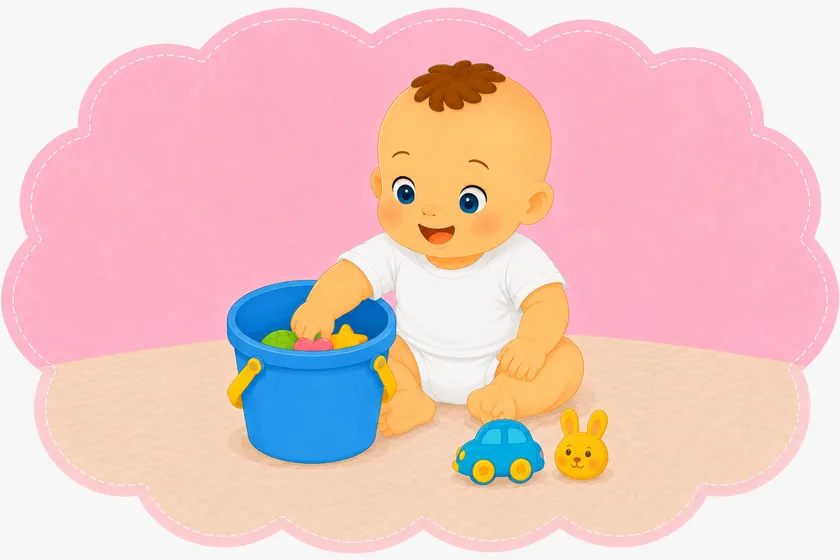
Place in a Box
You'll need: Box, small toys
How to do it
Show your child how to take toys out of the box and put them back.
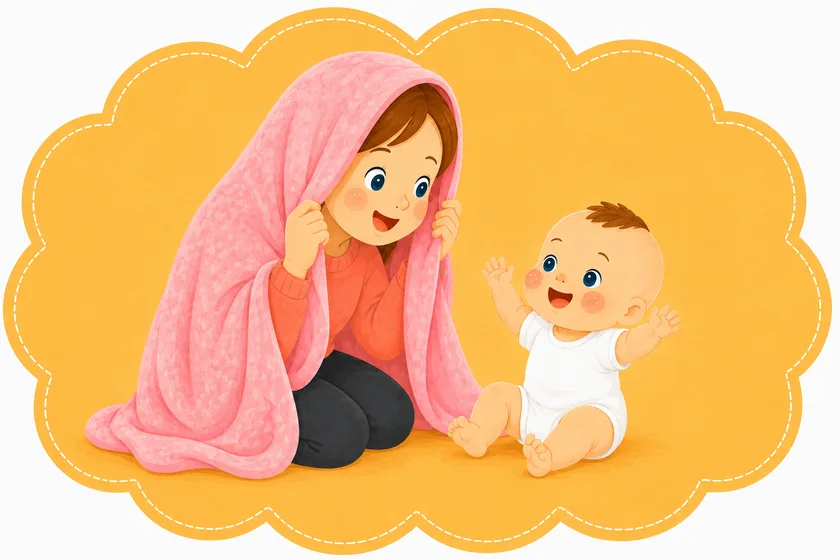
Jack-in-the-Box Parent
How to do it
Jack-in-the-box, don't you hide away,
Don't you want to come outside and play?
Jack-in-the-box, it is time to POP —
Peek-a-boo!
Hide behind a large box or cover yourself with a blanket, then pop out on "POP" to surprise your baby.

Coordination
How to do it
Slap, slap — let's make a clap!
Then a cuddle in my lap!
My little muffin, my little pie,
Come and giggle, laugh and fly!
My sweetest, dearest little one —
You're my favourite honey bun!
Clap baby's hands together in rhythm; on "You're my favourite honey bun!" lift their arms and form a circle above their head.

Body Parts Chant
How to do it
Head, shoulders, knees and toes,
Knees and toes,
Head, shoulders, knees and toes,
Knees and toes,
And eyes and ears and mouth and nose,
Head, shoulders, knees and toes!
Touch each body part gently as you name it. Start slowly — speed up a little with each round.
Important — please read. This article is for general information only and is advisory in nature. The activities are drawn from the BabyDone activity library and described in simplified form.
Nothing here is medical advice, and it doesn't replace an in-person visit with a qualified pediatrician. Every baby is different — if you have any concerns about your baby's health or whether an activity is appropriate, check with your doctor. Always stay close during playtime, and stop if your baby seems tired or fussy.