
9 Activities for a 9–12 Month Old Baby: First Steps and Pincer Grasp Practice
From safely climbing down off the couch and up the stairs to stacking rings and turning pages — 9 simple at-home games that get your baby ready for those first independent steps and build a precise pincer grasp.
By 9–12 months, your baby is changing fast: sitting confidently, crawling, or already cruising along furniture — and some babies are taking their first independent steps. The whole-hand grasp gives way to a precise pincer grip, and your baby increasingly picks up small objects, turns pages, and puts things inside one another.
Climbing down off the couch, going up improvised steps, a growing fascination with cause and effect — this isn't mischief, it's how your baby masters their body and the space around them. No new toys needed: a bottle, a box, a book, and the couch at home do the job just fine. Here are 9 ideas to make time with your baby fun and worthwhile. As with any active play at this age, follow age-appropriate safety guidelines and always stay close.
This article is informational and doesn't replace a pediatrician's advice — full note at the end.
In this guide
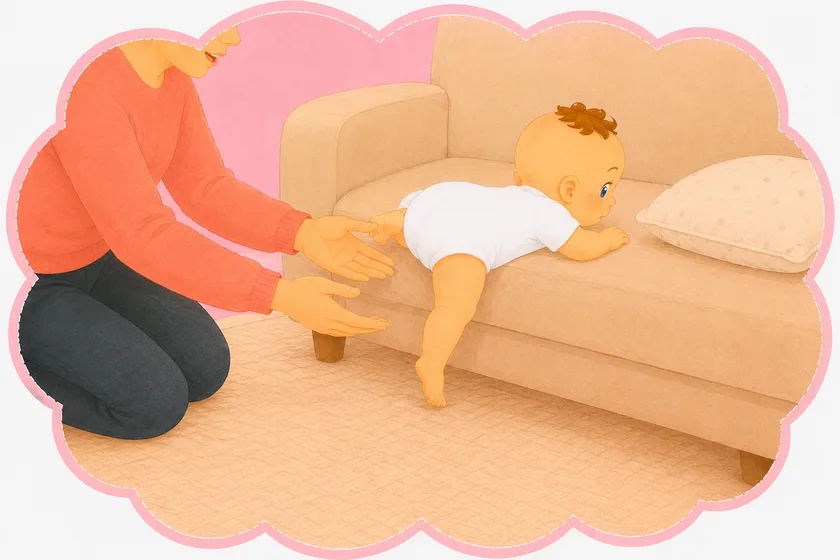
Climbing Down Safely
How to do it
Bring your baby to the edge of the couch. Gently turn them onto their tummy with their feet toward the edge. Help them slide one foot down, then the other — your baby comes down feet-first.
Repeat every time your baby reaches the edge. After a few weeks, they will start turning themselves around.
You can say "feet first" or "scoot down" — the word becomes a cue.
⚠️ Until the skill is solid, the couch remains a fall risk — keep your baby in sight at all times.
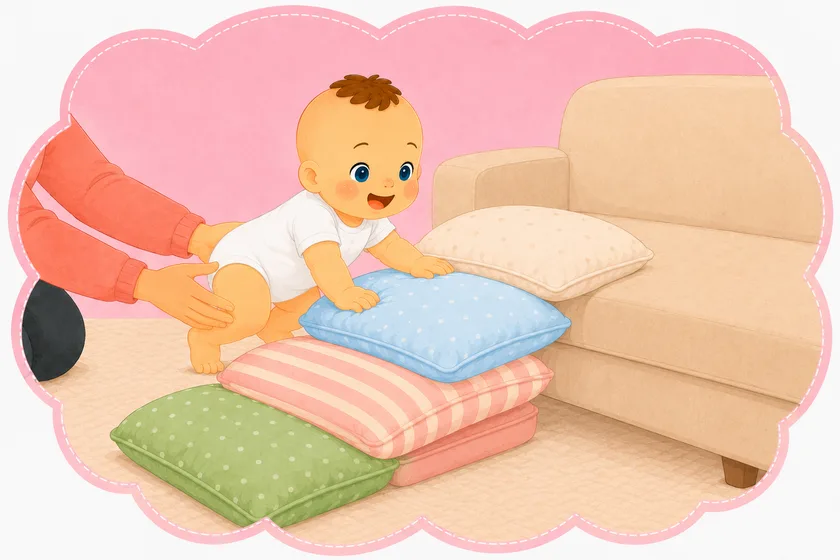
Up the Stairs
You'll need: Stable boxes of different heights
How to do it
Build a staircase from boxes or cushions and encourage your baby to climb up — and back down.
⚠️ Always spot your baby from behind.
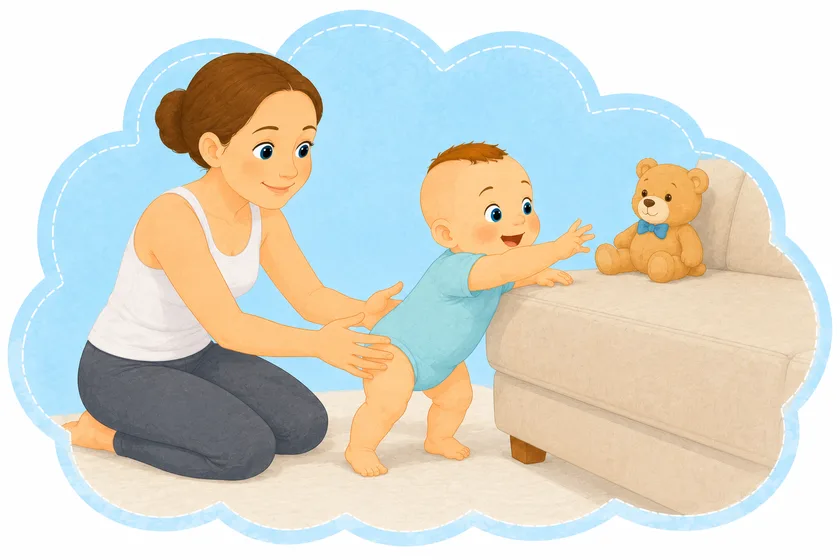
Standing Up
You'll need: Baby's favorite toy
How to do it
Place a favorite toy on the couch or a low table — just out of reach so your baby needs to pull up to standing to get it.
⚠️ Always spot your baby from behind.
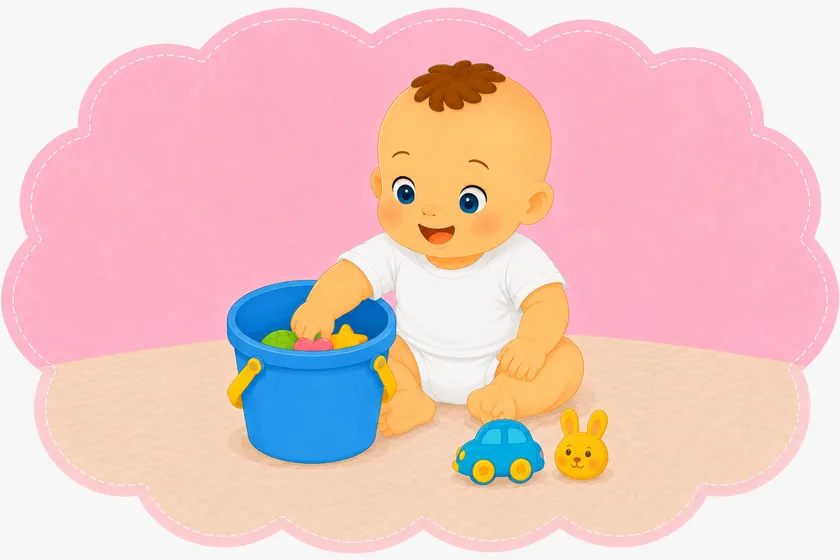
Place in a Box
You'll need: Box, small toys
How to do it
Show your child how to take toys out of the box and put them back.
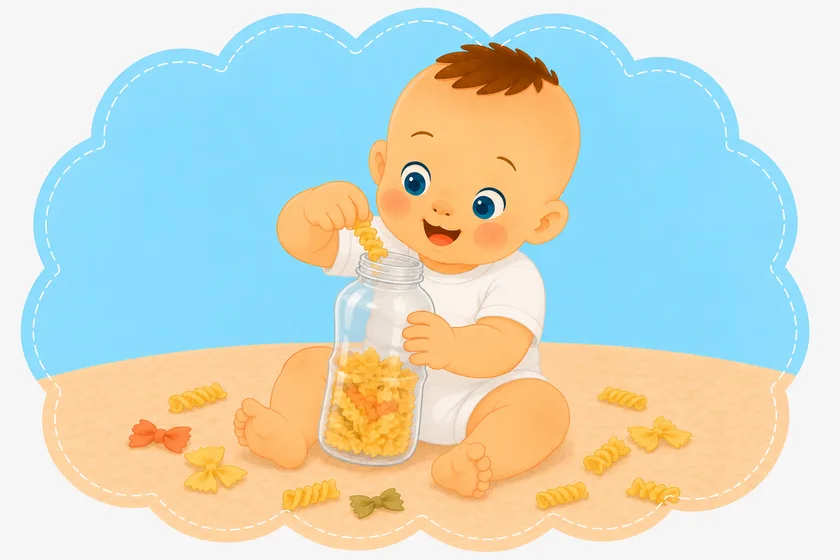
Filling the Bottle
You'll need: Wide neck bottle
How to do it
Show your baby how to drop dry pasta into the bottle. Then show them how to shake it out. Let them try.
⚠️ Always supervise.
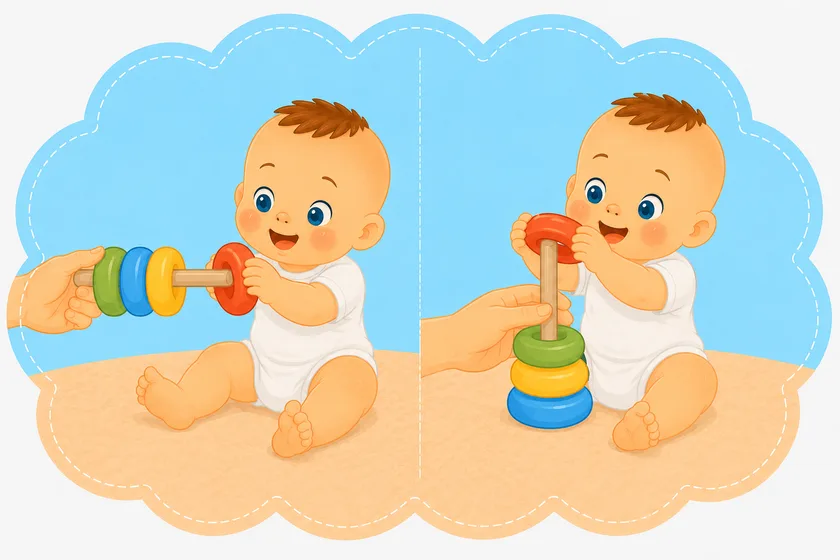
Assembling a Pyramid
You'll need: Pyramid (5–6 rings)
How to do it
Encourage your baby to thread rings onto the rod — first horizontal, then upright — guiding their hand if needed. Start by doing it together so the pattern becomes familiar.
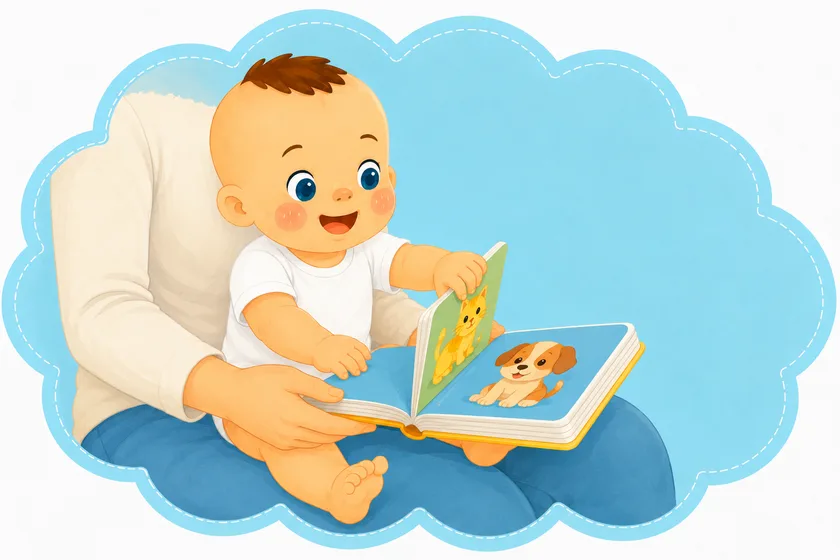
Turn the Pages
You'll need: Board book
How to do it
Read a board book together and let your baby turn the pages on their own — one at a time. Use board books with thick pages — thin ones are too hard to grip.
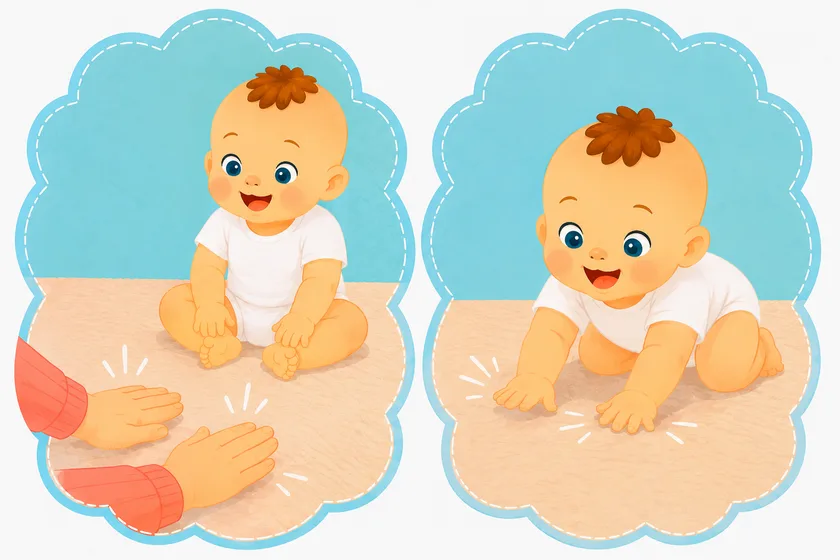
Copy Cat
How to do it
Make simple movements — knock on the floor, wave your hand — and encourage your child to repeat after you.
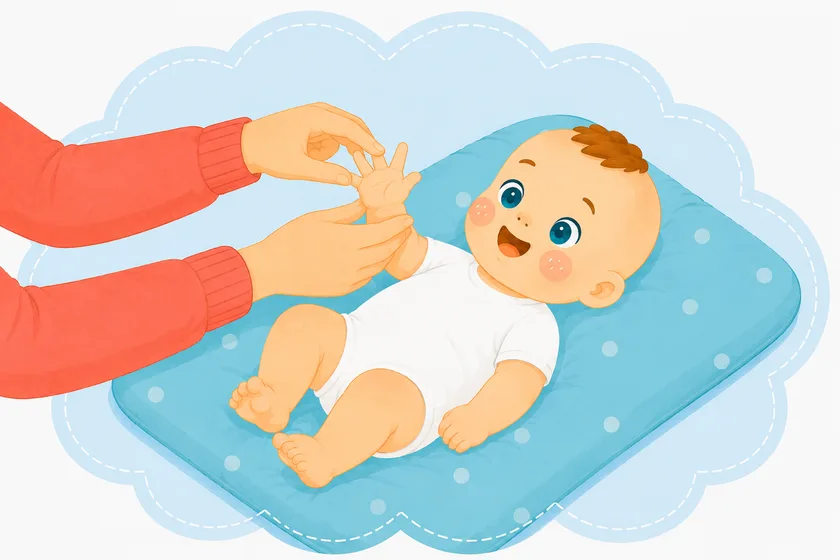
Fine Motor Skills
How to do it
One, two, three, four, five — once I caught a fish alive.
Six, seven, eight, nine, ten — then I let it go again.
Why did you let it go? Because it bit my finger so!
Which finger did it bite? This little finger on the right!
Open baby's fingers one by one on "one through five," then close them back into a fist.
Important — please read. This article is for general information only and is advisory in nature. The activities are drawn from the BabyDone activity library and described in simplified form.
Nothing here is medical advice, and it doesn't replace an in-person visit with a qualified pediatrician. Every baby is different — if you have any concerns about your baby's health or whether an activity is appropriate, check with your doctor. Always stay close during playtime, and stop if your baby seems tired or fussy.