
10 Activities for Your 0–3 Month Old: Simple Ideas to Try Together
Two-to-five-minute activities you can fit into any awake window — no special gear, no complicated programs.
This article is informational and doesn't replace a pediatrician's advice — full note at the end.
In this guide
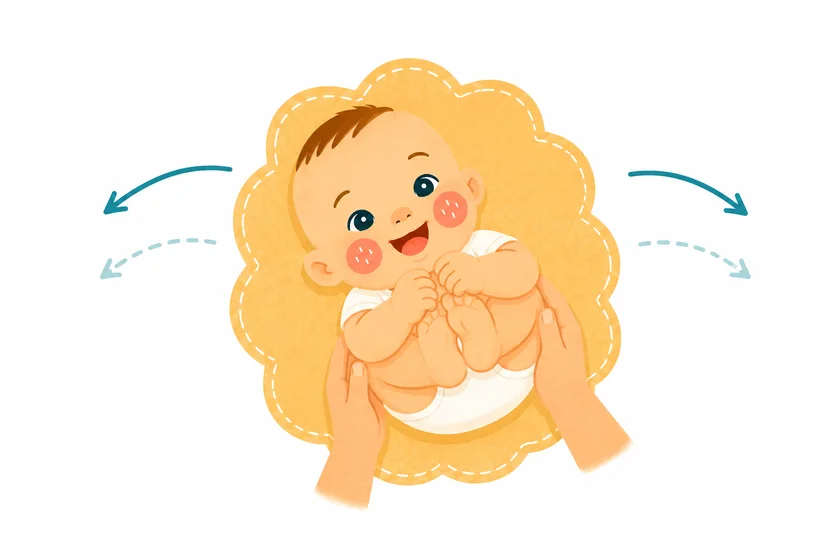
Little Ball
How to do it
Roly poly, roly poly, up, up, up.
Roly poly, roly poly, down, down, down.
Roly poly, roly poly, out, out, out.
Roly poly, roly poly, in, in, in.
Lay your baby on their back. On "in, in, in," bring the knees and hands to the tummy; on "up" and "down," gently rock from side to side.

Eye-to-Eye
How to do it
Hold your baby facing you, 10–12 inches away. Make eye contact, smile, and slowly change your expression. Say "Oh!" or "Ah!" — pause and wait for a sound or a look back. No rush.
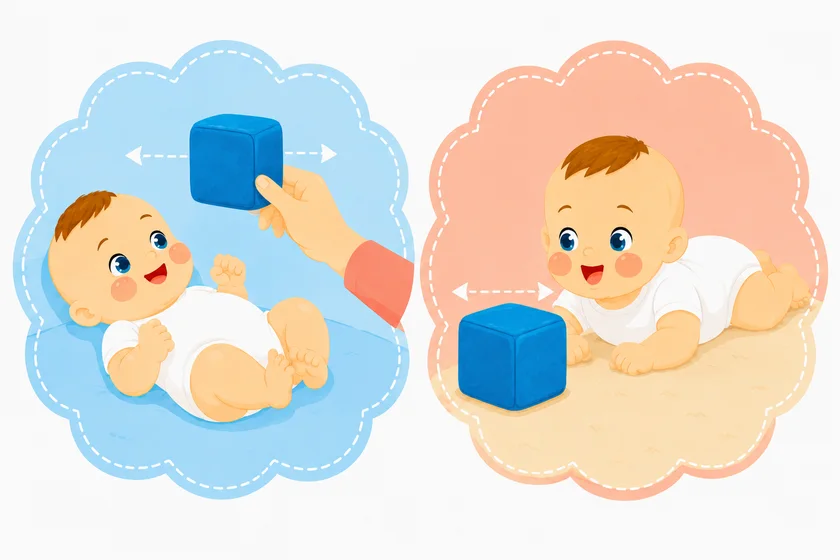
Bright Objects
You'll need: bright, one-color toys or objects
How to do it
Use bright, solid-colored objects — red, yellow, blue. Move slowly about 10–12 inches from your baby's face, left to right and up and down. Switch the object every few days for a new color or shape. You can also show and move it during tummy time.
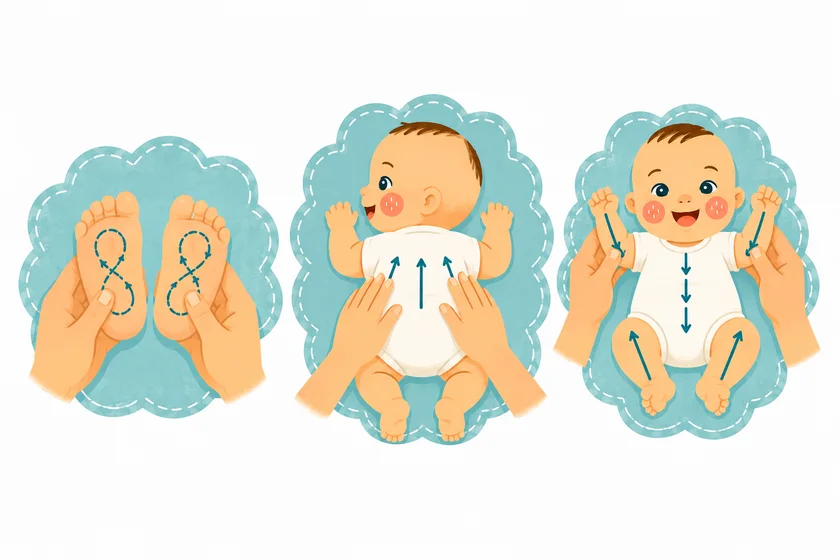
Massage for Body Awareness
You'll need: emollient, optional (if your pediatrician agrees)
How to do it
With warm hands, trace small figure-eights on the heels. Then stroke from the edges toward the center — arms toward the shoulders, legs toward the hips, back from bottom to top. Add light, soft squeezes to the arms and legs, and gently stroke the cheeks, forehead, and chin.
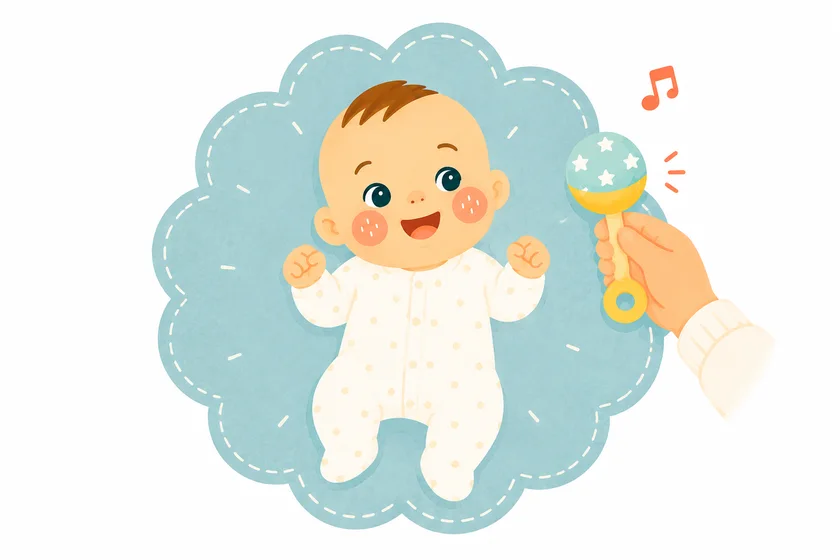
Rattle Tracking
You'll need: a small rattle with a gentle sound
How to do it
Shake the rattle to one side, about 8–12 inches away, and wait until your baby turns toward the sound. Alternate left and right, pausing between each shake.
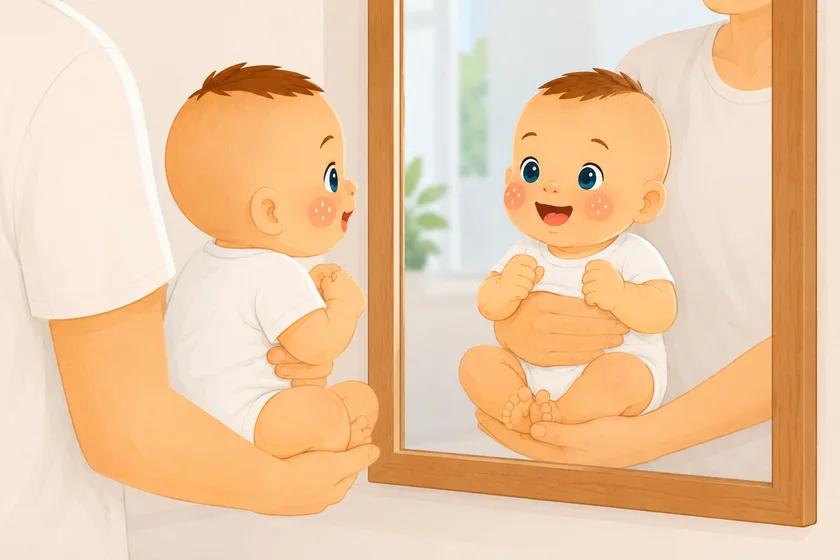
Mirror Play
You'll need: a shatterproof baby mirror (tabletop or wall)
How to do it
Bring your baby to the mirror, about 8–10 inches away. Let them study the reflection for 1–2 minutes, smiling and making faces alongside them — your baby compares the live face and the reflection. You can add peekaboo: turn away from the mirror together, then turn back with a cheerful "Peekaboo!"

Coo
How to do it
Wait for a sound from your baby — "ahh," "goo," "uh." Echo the same sound with the same intonation, then pause. Respond again. Vary the pitch — higher, lower, softer, louder.
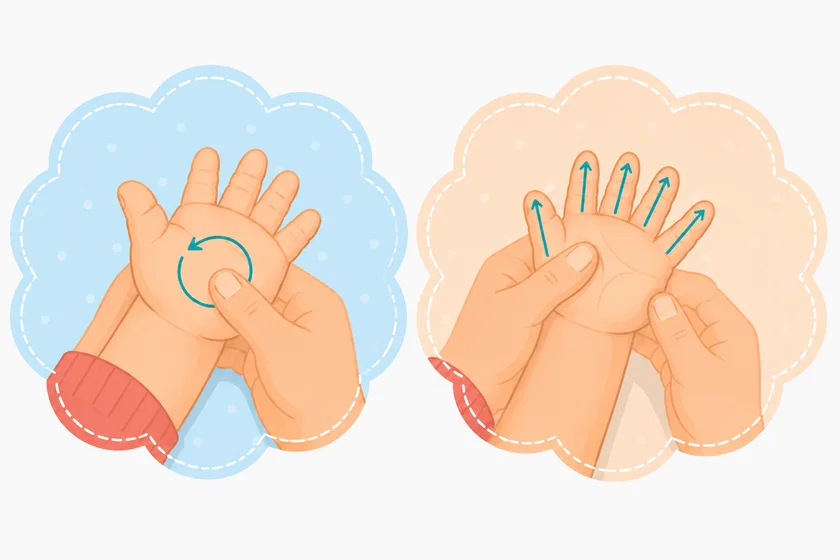
Hand Coordination
How to do it
Pat-a-cake, pat-a-cake, baker's man,
bake me a cake as fast as you can.
(clap baby's hands together)
Pat it,
(massage the palm with your thumbs)
and prick it,
(trace a pattern on the palm)
and mark it with a B,
(draw the letter B on the palm)
and put it in the oven for baby and me!
(curl the fingers into a fist and hold)

Buddha Hold
How to do it
Hold your baby in the Buddha position: facing outward, tummy resting on your forearm, legs gently tucked with your other hand. Name what your baby sees.

Body Parts Chant
How to do it
Head, shoulders, knees and toes,
knees and toes,
head, shoulders, knees and toes,
knees and toes,
and eyes and ears and mouth and nose,
head, shoulders, knees and toes!
Gently touch each body part as you name it. Start slowly, then speed up a little with each round.
Important — please read. This article is for general information only and is advisory in nature. The activities are drawn from the BabyDone activity library and described in simplified form.
Nothing here is medical advice, and it doesn't replace an in-person visit with a qualified pediatrician. Every baby is different — if you have any concerns about your baby's health or whether an activity is appropriate, check with your doctor. Always stay close during playtime, and stop if your baby seems tired or fussy.